

Be Parisian – Take the Bus!
Taking the bus is an essential part of Parisian life. Every time someone asks me about getting around Paris, I emphasise just how easy it is to use the bus to get to the sites. In the Montmartre area where you’ll find our cooking school, we have 5 great bus lines: the 31 (will get you to Gare du Nord, Gare de L’Est, and the Champs Elysée), the 67 (will take you to Ile Saint Louis), the 80 (will take you to the Eiffel Tower and the Champs Elysée), the 85 (will take you the Luxembourg Gardens and St Michel), and the 95 (Opera Garnier, drops you directly in front of Louvre and takes you into St Germain). So why trepidation when it comes to taking the bus? What’s the rush?
We get the question many many times, and I do understand the urgency, “how far are you from the sights”. But am I the only one who thinks that the entire city of Paris is a sight worth seeing? So why not take the time to see it while you are trying to get to the Eiffel Tower, Notre Dame, or the Champs Elysée? Stay above ground and take in the city. Walk or take the bus. The city has made it so easy for you to navigate its Haussmannian boulevards and even its windy medieval streets. Take a seat and look out your picturesque window on some of the greatest tours you will ever get.
You can find the maps of the bus routes closest to wherever you decide to stay, using the RATP website (the Paris transit site), get the RATP app if you can it will simplify buying your tickets. With this app/website, you can plan your itinerary whether by bus, metro, or Vélib (bike).
Paris is a mere 86.9 km2 (33.6 square miles). The congestion zone of London is larger than the city of Paris. It took me 45 minutes on the bus to get from the Mairie du 18ème (18th district town hall) to the Porte de Versailles. 45 minutes may seem long when you are on a fast 3-day break in Paris but after walking around the Salon de l’Agriculture all day long, my tired legs were more than happy to be seated on the bus and to just admire the view.

Sitting on the 80 bus from the Mairie I sat back (something that you don’t often get to do on the subway), watching the city go by. It’s falling in love with Paris all over again. Just admire the architecture!
I hope to have inspired you a little bit to try it out if you haven’t already. If you’d like to get around by bus in Paris I won’t leave you guessing about navigating the Parisian way. Here are some handy tips for making your bus ride as smooth as possible.
Bus Rules & Etiquette:
Getting off the bus – you simply need to press the signalling button that is on the poles to signal to the driver that you are ready to get off at the next stop.
Rush Hour – understand that at rush hour the bus may be packed. Be sure to let people off before you get on. Like in all crowded places be careful of pickpockets, though I find in general that you have less to fear on the bus than in the metro.
Baby strollers/Wheelchairs – there is a section of the bus that is reserved for baby strollers and wheelchairs. Anyone using either of these has priority. However with the exception of the wheelchair user, during rush hour you are expected to fold the stroller (if possible) and anyone sitting on foldable chairs near the front of the bus should stand.
Seating priority – priority to the elderly, pregnant, or handicapped, please! This is something that certain Parisians forget or miss due to the immersive info on their phone screens. So even if you see other people sitting and you are nervous about speaking French, go for it! Try your best to say “vous voulez vous asseoir (pronounced asswahr) Madame/Monsieur?” with the intonation of a question or use the international bus language of standing up and motioning the person to your seat. In my five years of living in Paris there have only been two types of responses: a smile and appreciative “non merci” or an acceptance with a glint in their eye showing restored faith in humanity. The latter may not happen if you hesitate for too long and wait for a few glares at your spot and frustrated sighs from the person.
To travel seamlessly around Paris avoiding awkward moments with locals it’s always a good idea to have an understanding of the city’s unwritten rules.
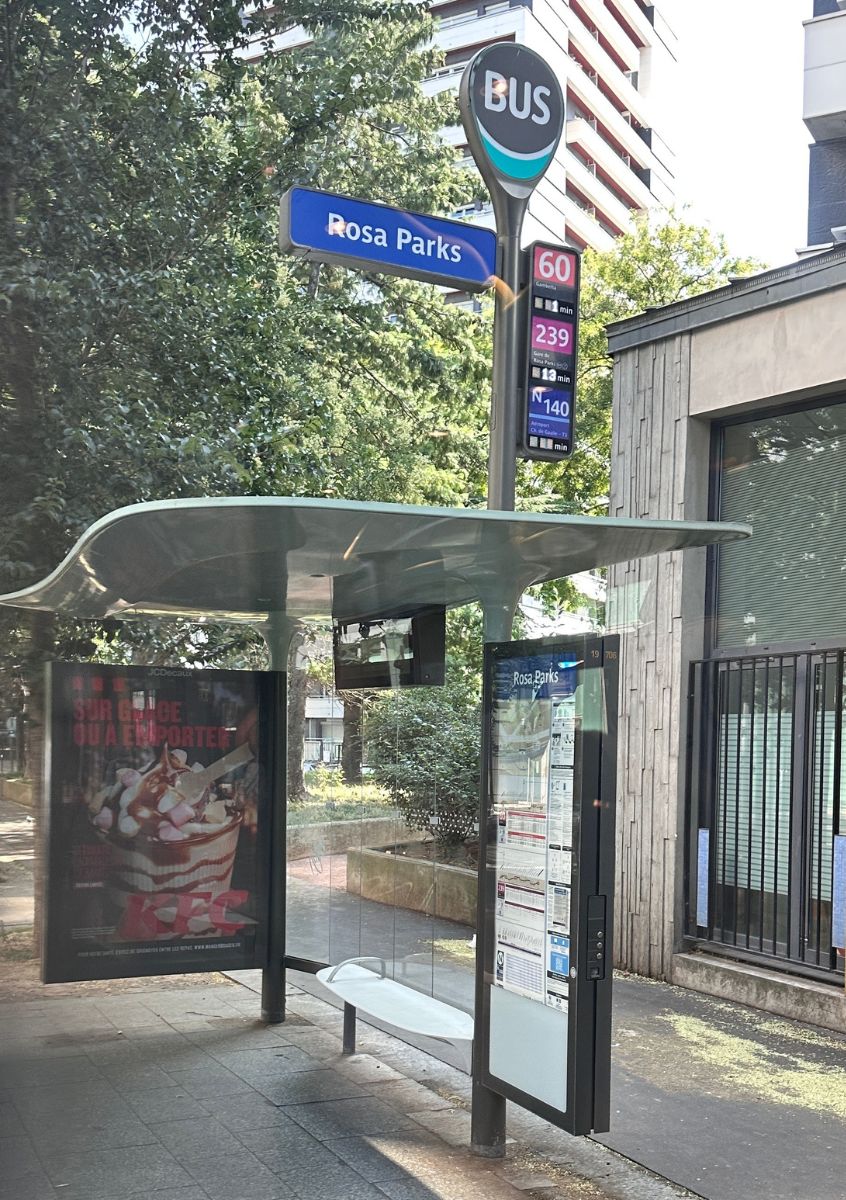
How to buy a Paris bus ticket in 2025:
Buying a bus ticket in Paris is much easier now that most payments have gone digital—but it also means a few older methods have disappeared. Paper tickets are being phased out in 2025, so you’ll want to plan ahead and choose one of the current options:
-
Navigo Easy Card – A reusable, contactless card that you can load with single tickets, day passes, or bundles. The card costs €2 and can be purchased and recharged at ticket machines in Metro stations or at select tobacconists. A single Bus/Tram ticket on Navigo Easy is €2.00, and a Metro/RER ticket is €2.50.
-
Navigo Liberté+ – A pay-as-you-go option linked to your bank account. It offers discounted fares (€1.60 per Bus/Tram ride, €1.99 per Metro/RER ride) and caps your total spend at €12 per day, no matter how many trips you make.
-
Île-de-France Mobilités App – Buy and store digital tickets directly on your phone, then validate them by scanning at the bus or Metro entrance.
Tickets are valid for 90 minutes from the first validation on buses and trams, with unlimited transfers between them during that time. However, bus/tram tickets are not valid for transfers to the Metro or RER. For that, you’ll need a Metro/RER ticket or pass.
Tip: You can still buy single paper tickets from ticket machines in Metro stations, but bundles of 10 (carnets) are no longer available, and all paper tickets will disappear entirely by the end of 2025.
Fines & Rules to Know:
Ticket checks happen regularly, and inspectors can board at any stop. If you don’t have a valid ticket—or if you forget to validate it—you can be fined. The standard fine is €50 if paid immediately, rising to €90 if paid later. Each passenger must have their own ticket, and you should keep it until you exit your final stop in case of inspection. You can check the finable rules here.
Can you pay on the bus?
No, bus drivers in Paris do not sell tickets, and cash is not accepted. You’ll need to have your ticket ready before boarding, either on a Navigo card (Easy or Liberté+), in the Île-de-France Mobilités app, or as a valid paper ticket purchased in advance from a Metro station machine. Once on board, validate your ticket at the card reader near the entrance.
SMS Ticketing Remains Available
-
You can still purchase a ticket by sending “BUS[number]” (like BUS29) to 93100 before boarding a bus. You’ll receive an SMS that serves as your ticket, valid for 1 hour with no transfers. This costs €2.50, plus standard SMS charges, and you must show the SMS to the driver upon boarding.
-
It’s a convenient fallback if you don’t have Navigo cards or digital app access. Just be sure your mobile plan supports SMS (Orange, SFR, Bouygues, or Free).
But Digital Is the New Normal
The primary ticketing methods in 2025 are now digital:
-
Navigo Easy or Liberté+ cards
-
The Île-de-France Mobilités app
-
Contactless validation at readers when boarding
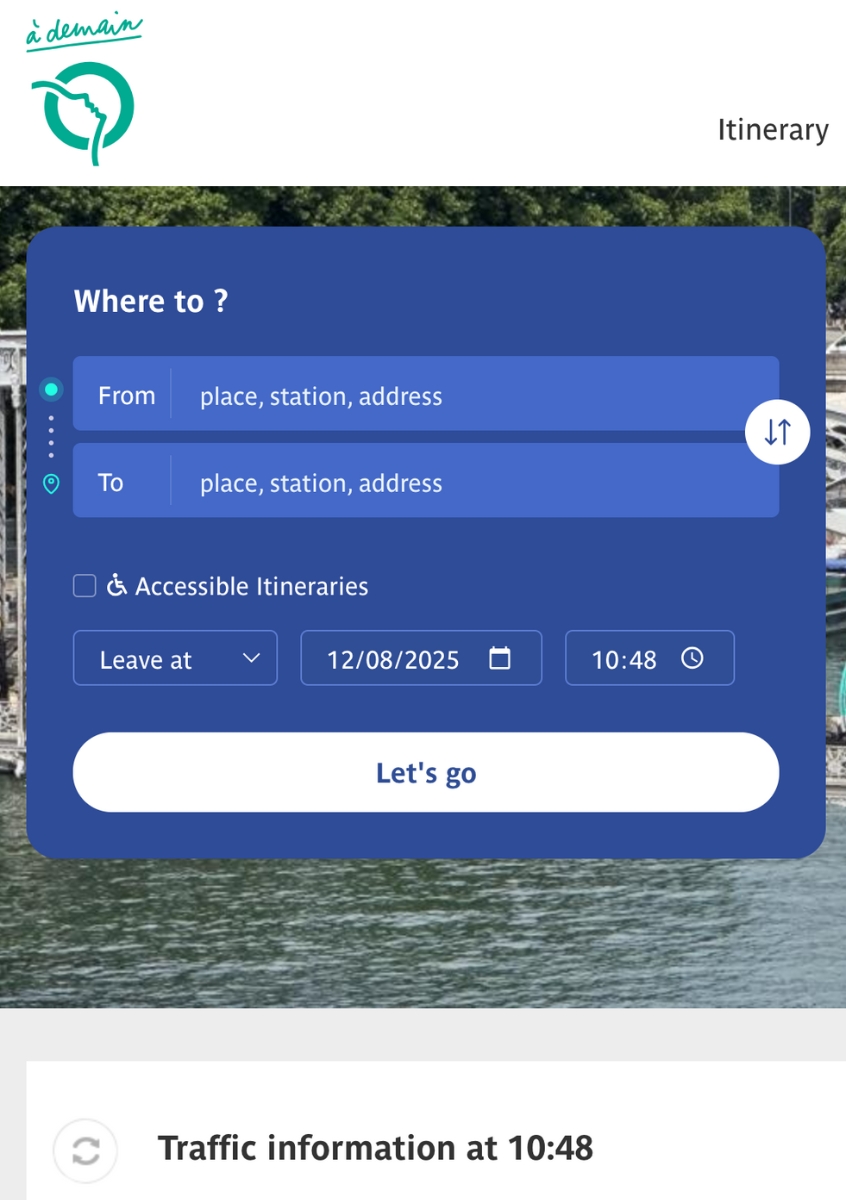
Where can I buy tickets in Paris?
You can top up your Navigo Easy or Liberté+ card at any Metro/RER station ticket machine, Navigo service counter, or via the RATP Île-de-France Mobilités app if your phone supports NFC. If you buy a digital ticket, it’s stored in your phone’s ticket wallet and can be scanned directly at the validator — no physical card needed. Each person needs their own card—sharing isn’t allowed.
Tourist Pass Options Worth Comparing:
-
Day Pass (Navigo Jour) – A great option for full-day exploring. Costs €12 for all zones (1–5), valid from midnight to 11:59 p.m.
-
Weekly Navigo Pass (Navigo Semaine) – Covers unlimited travel from Monday to Sunday, regardless of purchase day.
-
Full zones (1–5): €31.60
-
Zones 2–3: €29.60
-
Zones 3–4: €28.60
-
Zones 4–5: €28.20
-
Note: If you buy the weekly pass midweek (e.g., Saturday), you’ll still pay the full price for two days of coverage. Still, it’s often a smart choice if you’ll be using public transport frequently.
How Long Are These Tickets Valid?
-
SMS Bus Ticket – Valid for 1 hour on the specific bus you purchased it for. No transfers are allowed to other buses, trams, or the Metro/RER.
-
Bus/Tram Ticket (Navigo or paper) – Valid for 90 minutes from first validation, with unlimited transfers between buses and trams during that time. Not valid for transfers to the Metro or RER.
-
Metro/RER Ticket – Valid for 2 hours from first validation, with unlimited transfers between Metro and RER lines inside Paris. Not valid for transfers to buses or trams.
Tip: Always validate your ticket or pass when boarding, even if it’s loaded on a Navigo card. Unvalidated tickets are treated as invalid, and inspectors can fine you on the spot.
Now that you have your ticket/pass hop onto a Paris bus, search for a window seat, snack on the chouquettes you learned how to make at our cooking school and simply enjoy the ride. The bus is one of my favorite ways to get around Paris. I remember being apprehensive when I was a student and it was my first time. It was my host mother who took us on the bus for the first time and she informed us that the bus and the Paris map book were the most Parisian of Parisian things.
Still not sold on the bus? Check out our blog on all the ways you can get around Paris.